Questo o Quello? A complete guide to Italian demonstrative adjectives
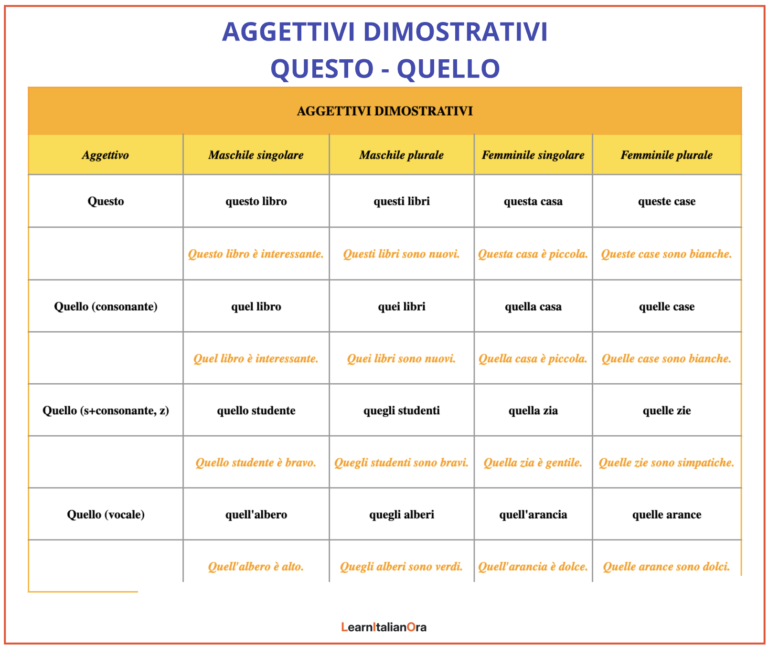
Are you unsure whether to say 'questo libro' or 'quel libro'? You're not alone! The difference between questo and quello confuses many learners.
Read more →
FREE ITALIAN RESOURCES
Clear explanations, authentic examples and practical exercises to help you understand Italian and use it in everyday situations.
Clear explanations and practical examples.
Practise each topic with instant feedback.
Personalised guidance when you're ready.
LEARN FOR FREE
Grammar, vocabulary, pronunciation and culture, organised to help you find the content you need and build your Italian step by step.
Start hereAre you unsure whether to say 'questo libro' or 'quel libro'? You're not alone! The difference between questo and quello confuses many learners.
Read more →Italy is known throughout the world for its rich culture, art, cuisine... and for its gestures! Anyone who has had the opportunity to interact with an Italian knows how expressive they are when communicating, and gestures are an essential part of this expressiveness.
Read more →Modal verbs - potere (can), volere (want) and dovere (must) - are key to expressing yourself in Italian. These verbs allow you to express possibilities, desires and obligations, making them essential tools for anyone learning the language.
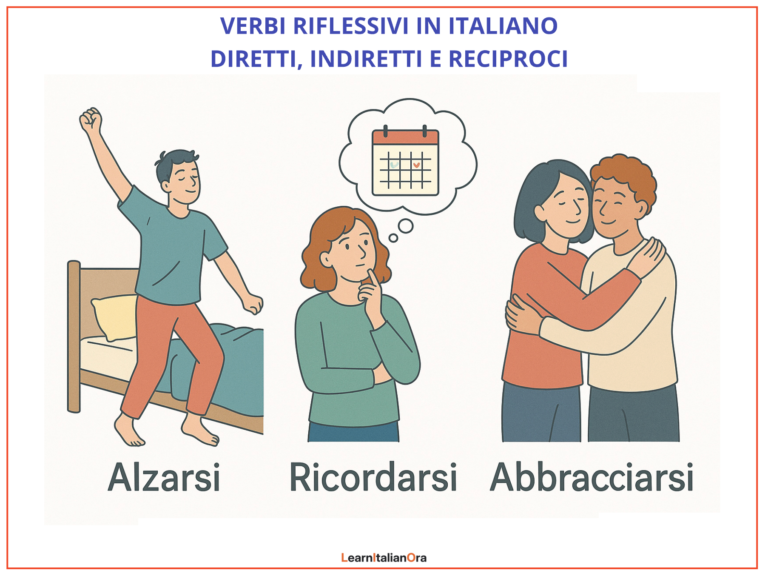
Read more →Reflexive verbs (verbi riflessivi) are very common in Italian and can be tricky at first. In this guide, you’ll learn how to use Italian reflexive verbs, including common reflexive verbs in daily life.
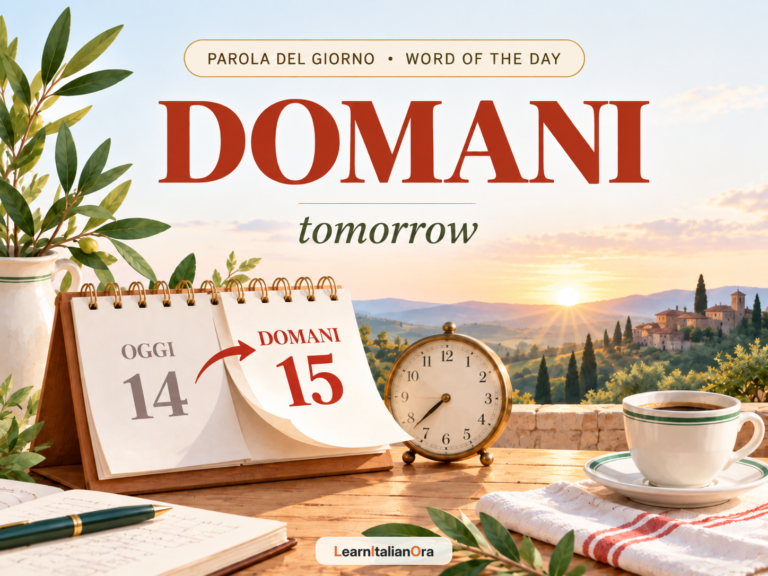
Read more →La parola domani indica il giorno dopo oggi. Può anche essere usata per parlare di un tempo futuro. A domani → Si usa per salutare qualcuno che si vedrà il giorno dopo.
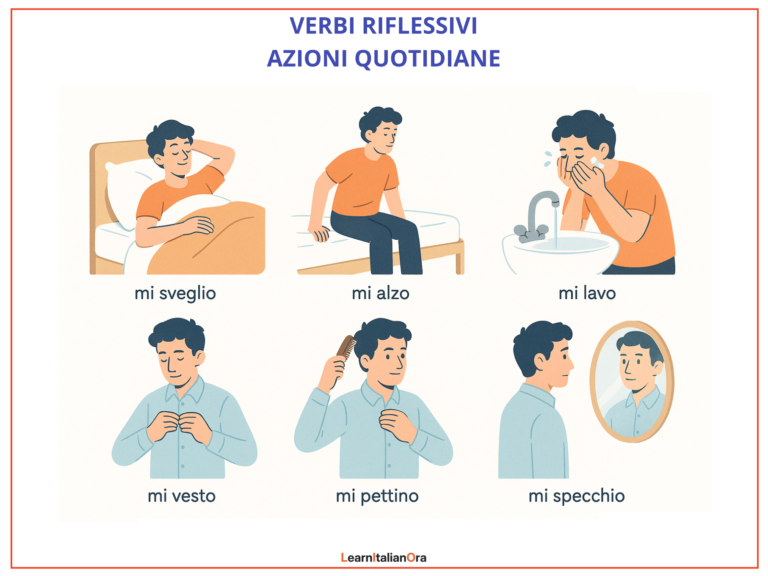
Read more →Every day we perform many everyday actions: we wake up, wash, dress, eat, work and go to sleep. But how do we describe these actions in Italian?
Read more →Il termine negozio indica un luogo dove si vendono prodotti o servizi. Può essere un piccolo negozio di quartiere o un negozio più grande.
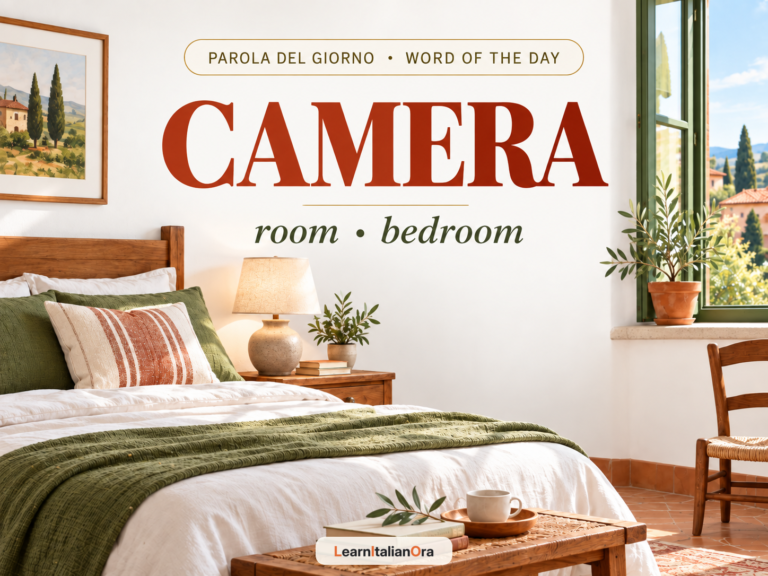
Read more →La parola camera significa una stanza della casa, di solito dove si dorme. Può anche indicare una stanza in un hotel. Camera da letto → Il posto dove dormiamo.
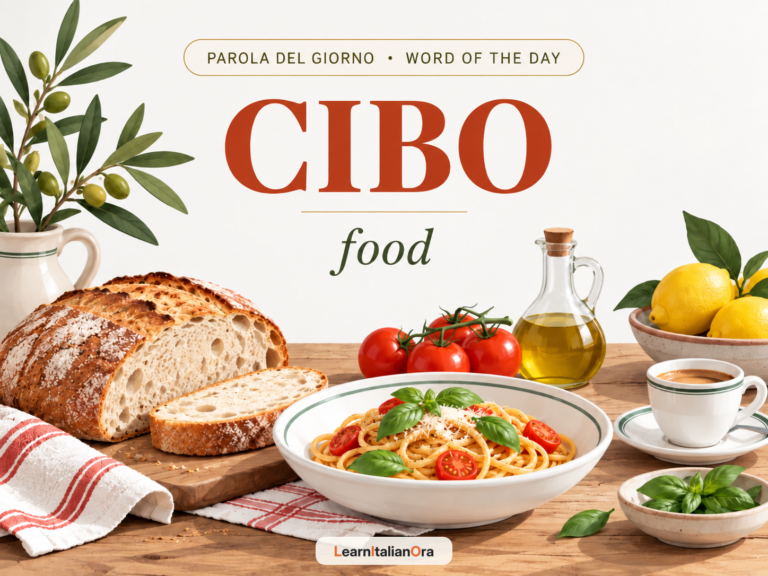
Read more →Il cibo è tutto ciò che mangiamo per vivere: frutta, verdura, pane, carne, dolci e molto altro. Si usa per parlare degli alimenti in generale.
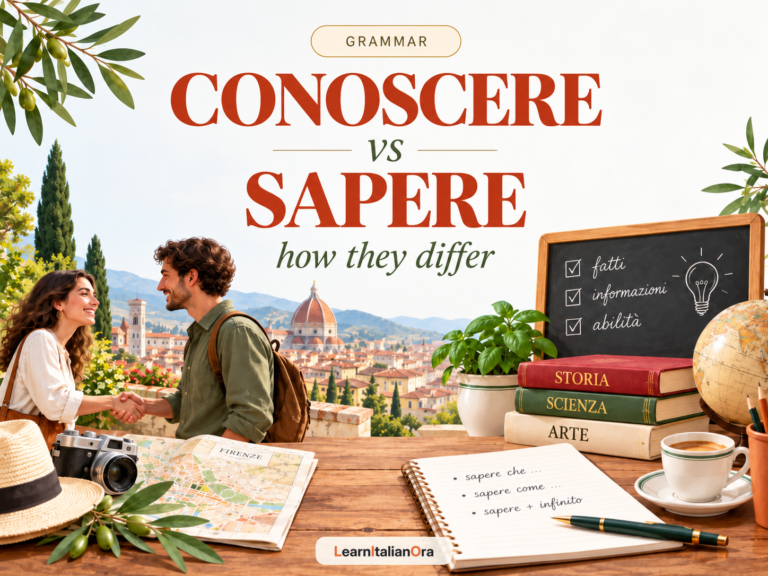
Read more →When learning Italian, one of the most common doubts is the difference between the verbs 'conoscere' and 'sapere'. These two verbs, although they can be translated as 'to know' in English, are used in different contexts and with different meanings.
Read more →Sono molti gli studenti che arrivano alle lezioni di italiano affermando di averlo imparato con Duolingo, Promova o altre app per l'apprendimento delle lingue.
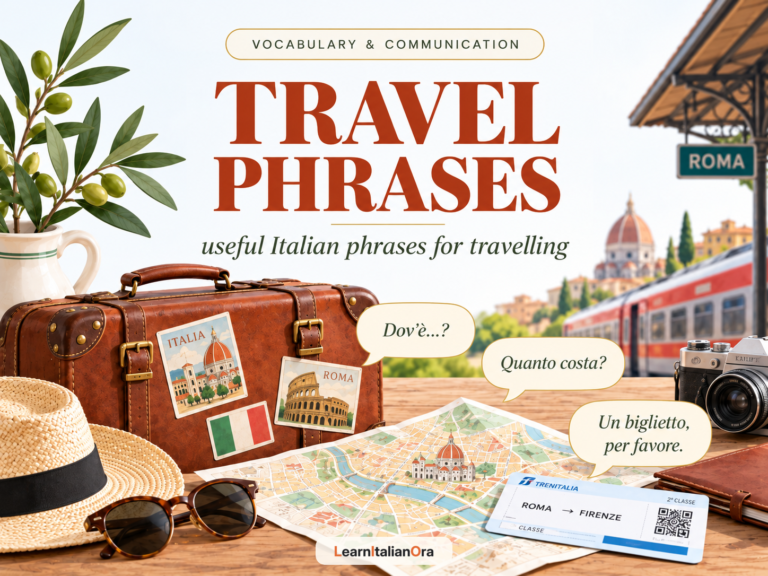
Read more →Are you planning to visit Italy during the festive season? Whether you're visiting beautiful Christmas markets, enjoying festive meals or simply exploring the streets decorated with Christmas lights, these practical and simple Italian phrases will help you communicate with ease and make the most of your trip.
Read more →Each topic includes three free interactive exercises designed to reinforce the language you have just studied.
Book a one-to-one online lesson for personalised guidance, conversation practice and feedback.