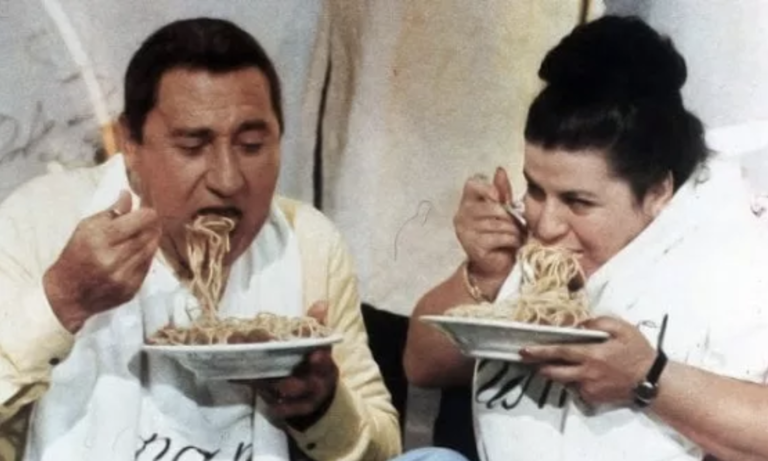
Italy is known throughout the world for its rich culture, art, cuisine… and for its gestures! Anyone who has had the opportunity to interact with an Italian knows how expressive they are when communicating, and gestures are an essential part of this expressiveness. In this article we will explore some of the most common Italian gestures and their meanings, along with some interesting facts about how the same gestures can be interpreted differently in other cultures.
The meanings below are useful reference points, not fixed rules. Gesture use can vary by region, context, age, relationship between speakers and facial expression.
1. The ‘What do you want’?
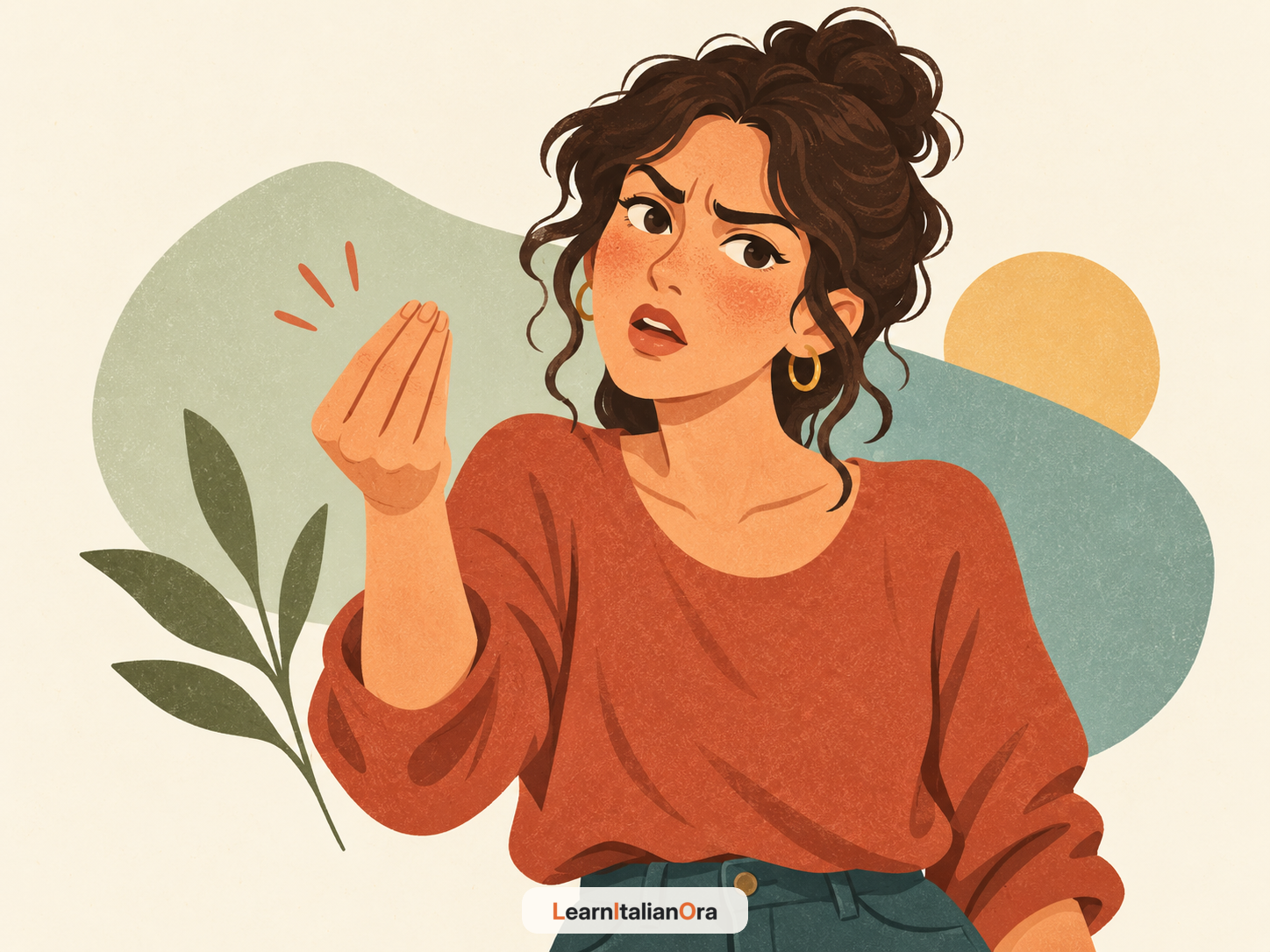
If you happen to see an Italian speaking, you have probably noticed this gesture. By joining all the fingers of the hand with the thumb, a sort of cone is formed that moves up and down. This gesture expresses confusion or frustration and can be translated as ‘what do you want‘ or ‘what are you saying’. It is one of the most iconic symbols of being Italian.
2. The hand under the chin – I don’t care

By placing the fingers of the hand, excluding the thumb, under the chin and sliding them forward, a speaker can express indifference or “I don’t care”. In some southern contexts, the same or a very similar movement can also be used to express “no”. Context and facial expression help to clarify the intended meaning.
3. The horns – Ward off bad luck or… cornuto!
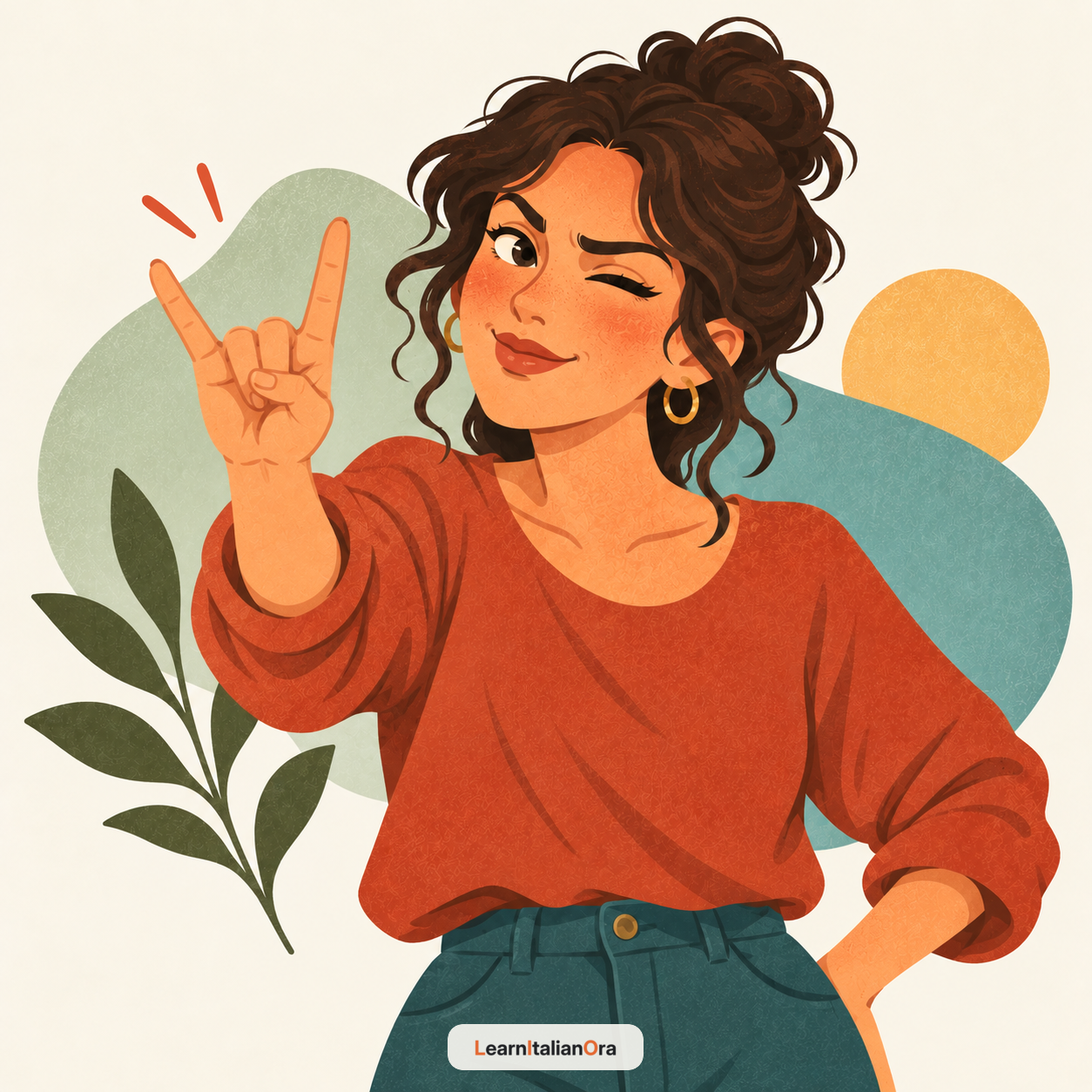
The gesture of fare le corna, made by extending the index and little fingers while the other fingers remain bent, can have different meanings according to context. When used as a protective or superstitious gesture, the horns may be directed downwards or away from the body to ward off bad luck. When deliberately directed at a person, the same hand shape can be insulting because it can allude to infidelity.
4. The ‘OK’ gesture
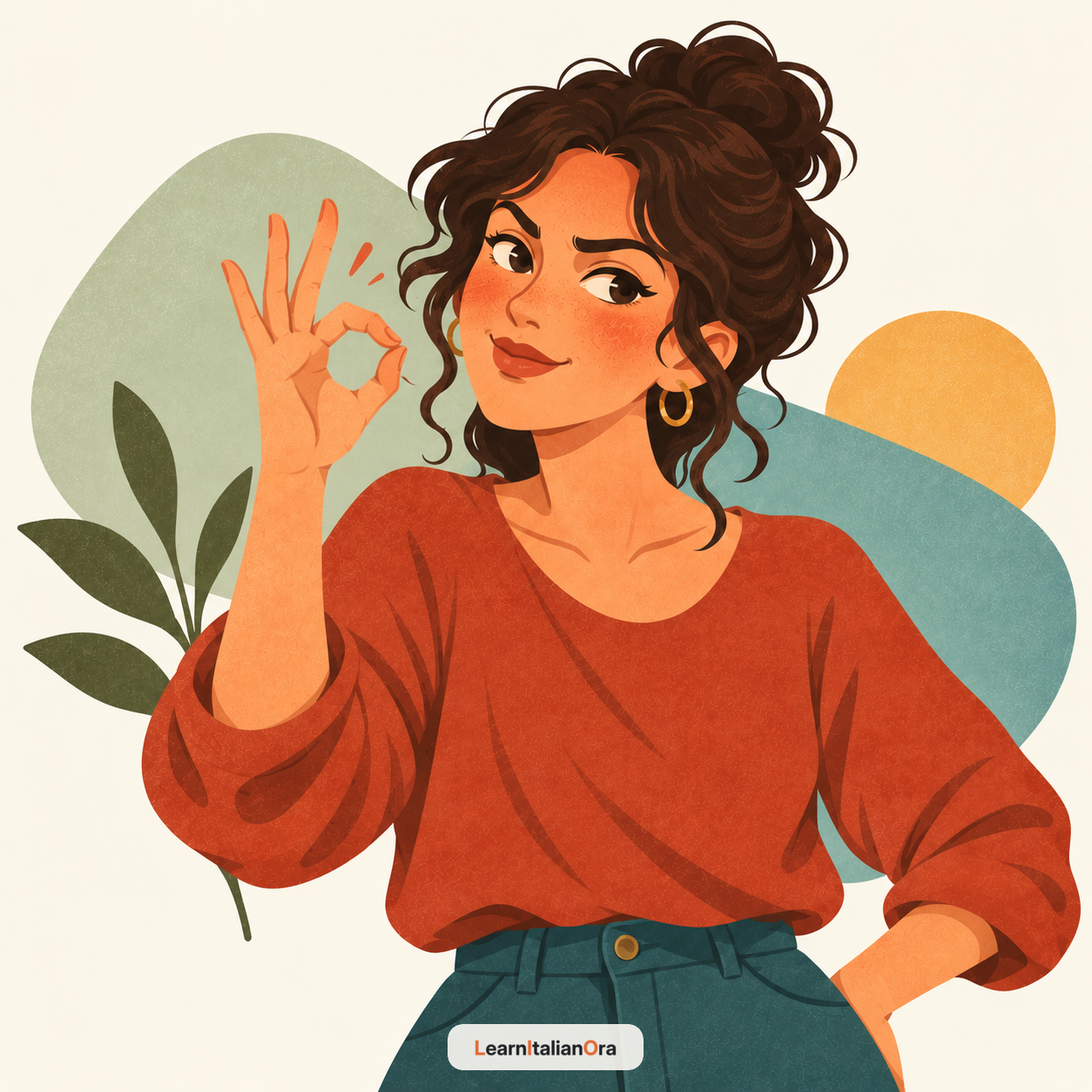
Forming a circle with the thumb and index finger is commonly used to mean “OK”, “perfect” or “excellent”. The gesture is also used in many other cultures, and its interpretation still depends on context.
5. The flat hand across the stomach — “I can’t take it any more”
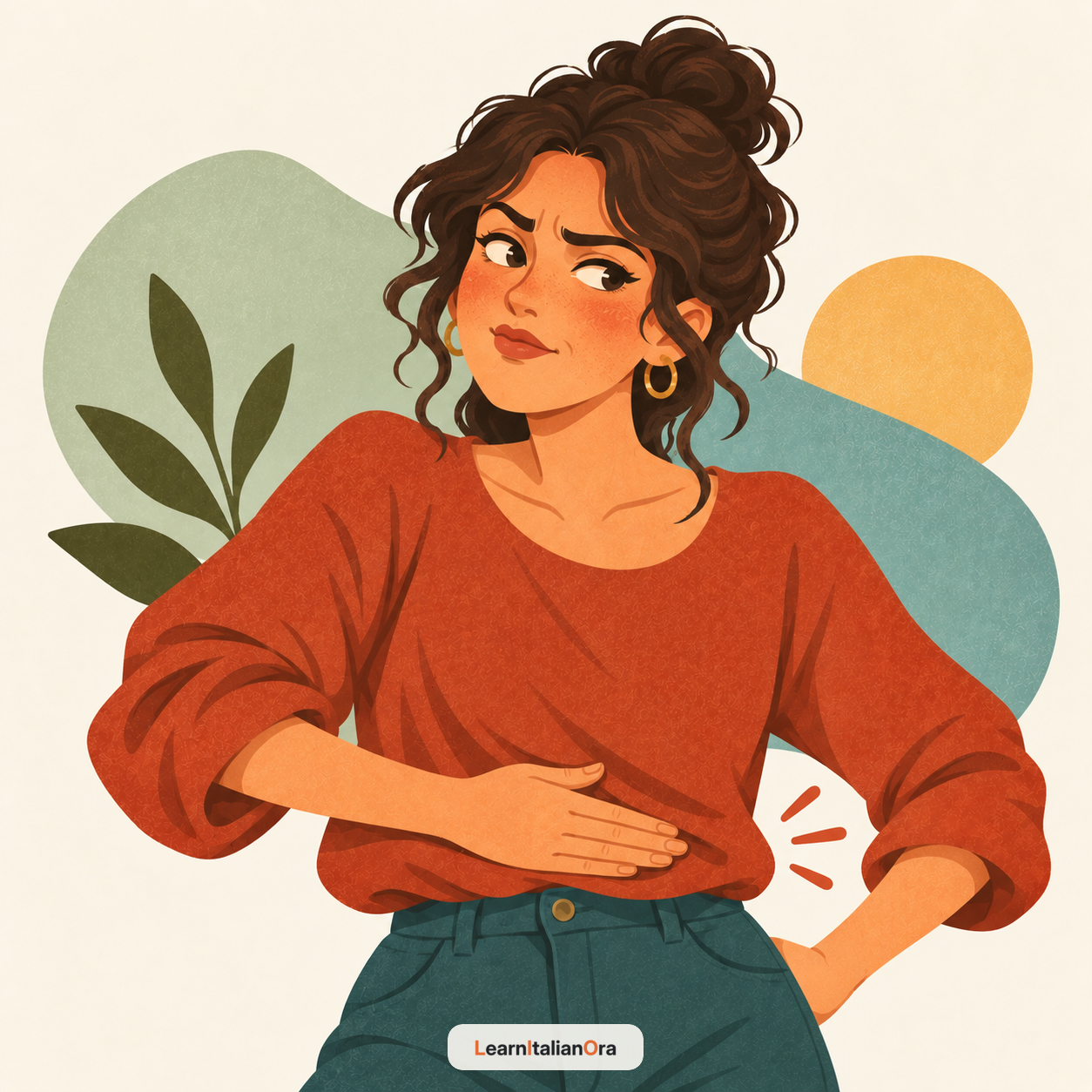
A flat hand held across the stomach and moved back and forth can express that a person or situation has become heavy, annoying or difficult to tolerate — a non-verbal way of saying “I’ve had enough” or “I can’t take it any more”. In a particular context it can also be directed at someone who is being a burden. This is an informal and potentially coarse gesture, so learners may find it more useful to recognise it than to imitate it.
6. The rotating hand on the belly – Feeling hungry or full

A movement over the stomach can refer to hunger, appetite, satisfaction after food or feeling full. The situation and facial expression are essential to the interpretation.
7. Raising and lowering the hand – Calm down
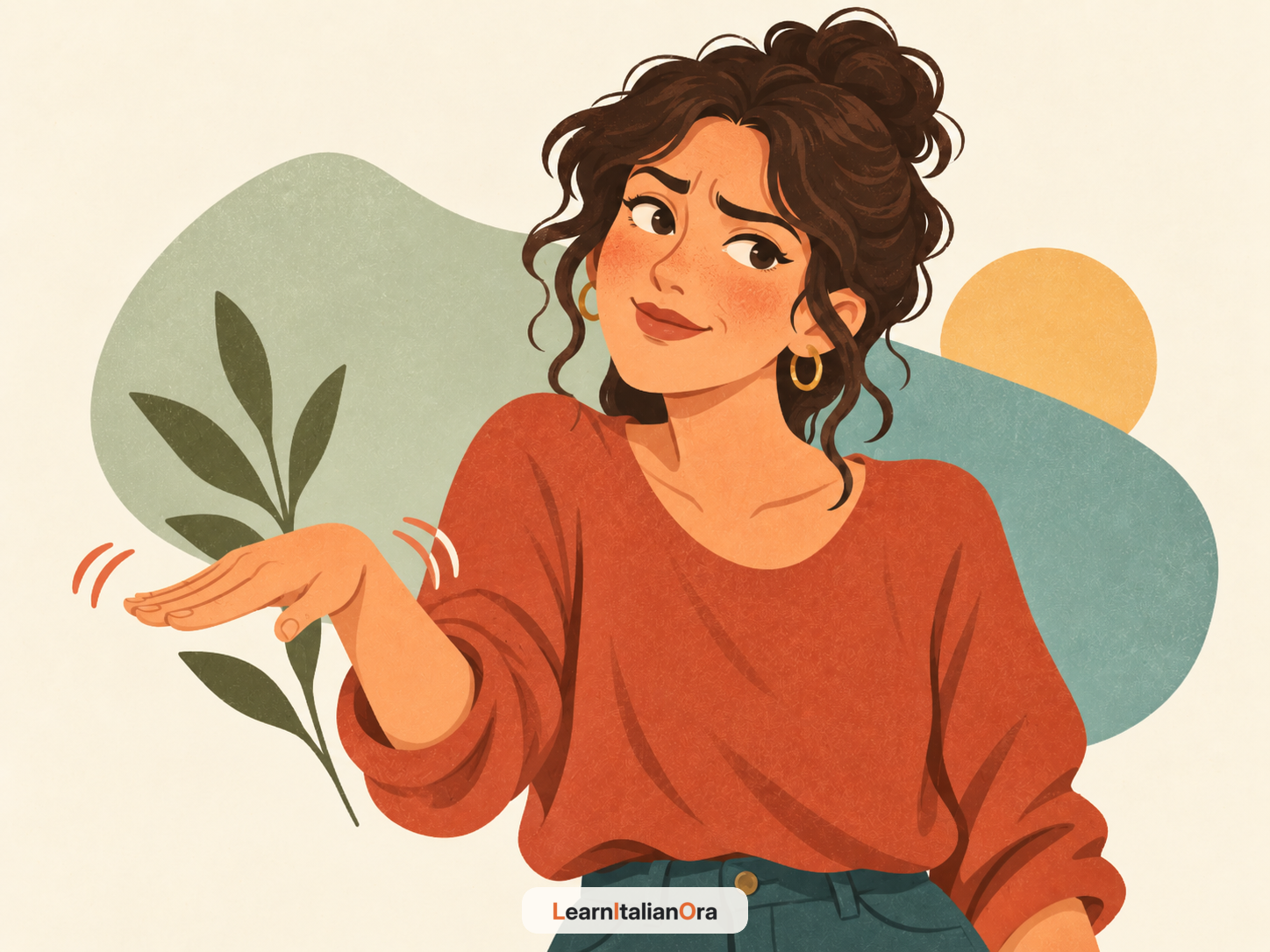
Moving your hand up and down with the palm facing down is a gesture that invites calm. It is used to say ‘be calm’ or ‘relax‘ and is often used to defuse a situation or to calm an upset person.
8. The two palms together – “What are you talking about?” gesture
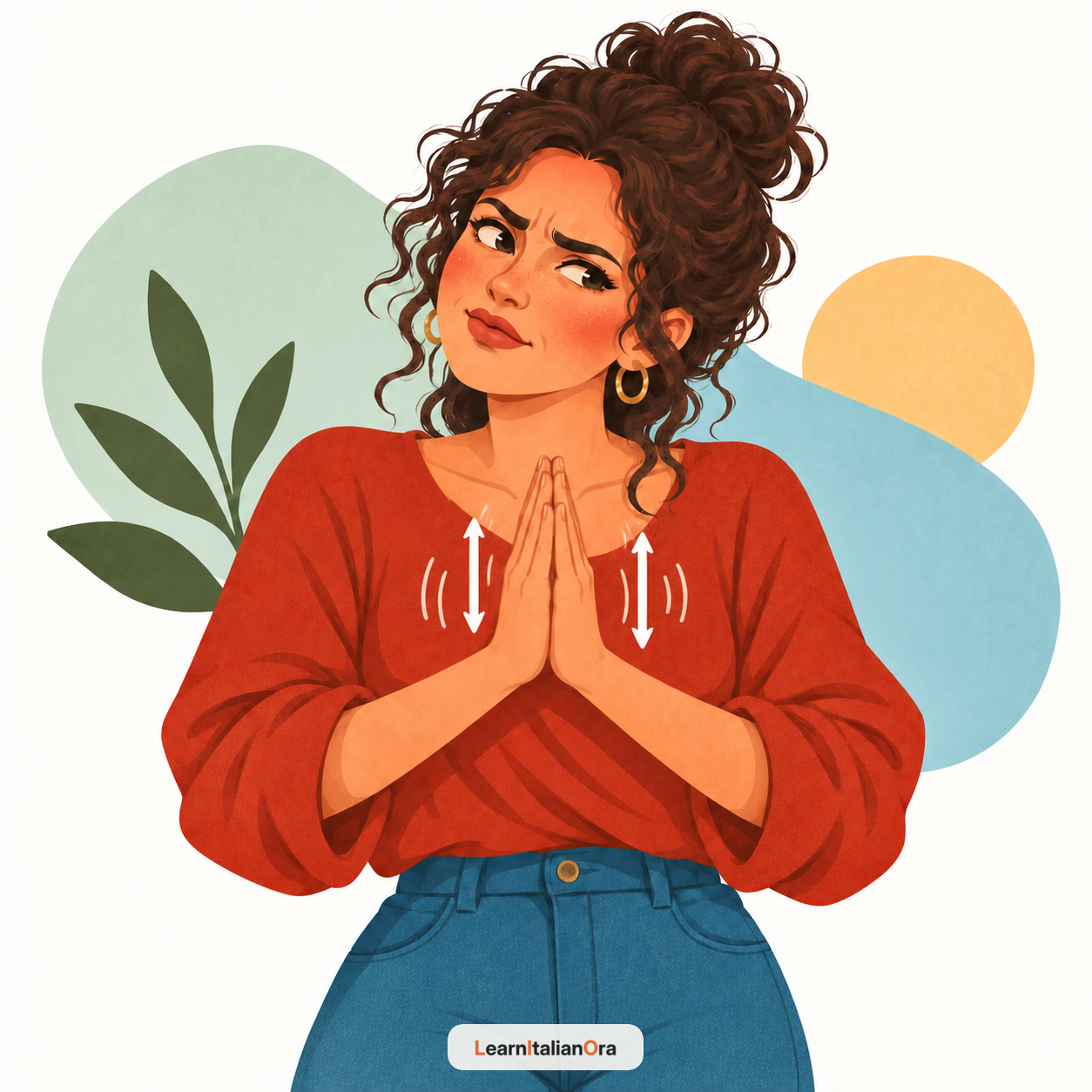
Bringing the palms together and moving them can express disbelief, exasperation or a request for explanation — for example, “What are you talking about?” The force of the gesture depends on tone and facial expression.
9. The head up – Nope!
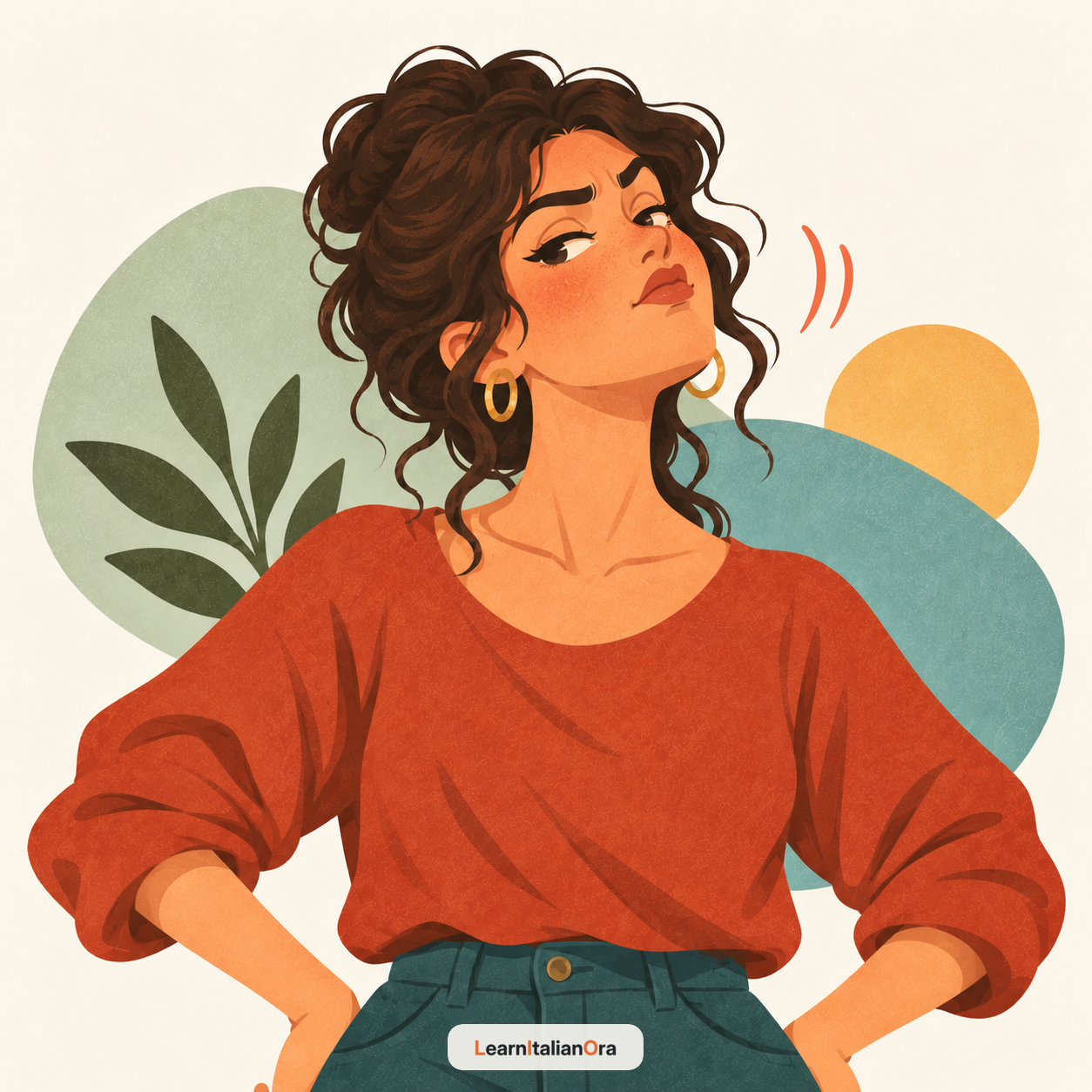
A quick upward movement of the head is a recognised way of saying “no”, used especially in southern Italy. As a negative gesture it is much less common in northern everyday use.
10. Opening and closing hand gesture – “You afraid, aren’t you?” gesture
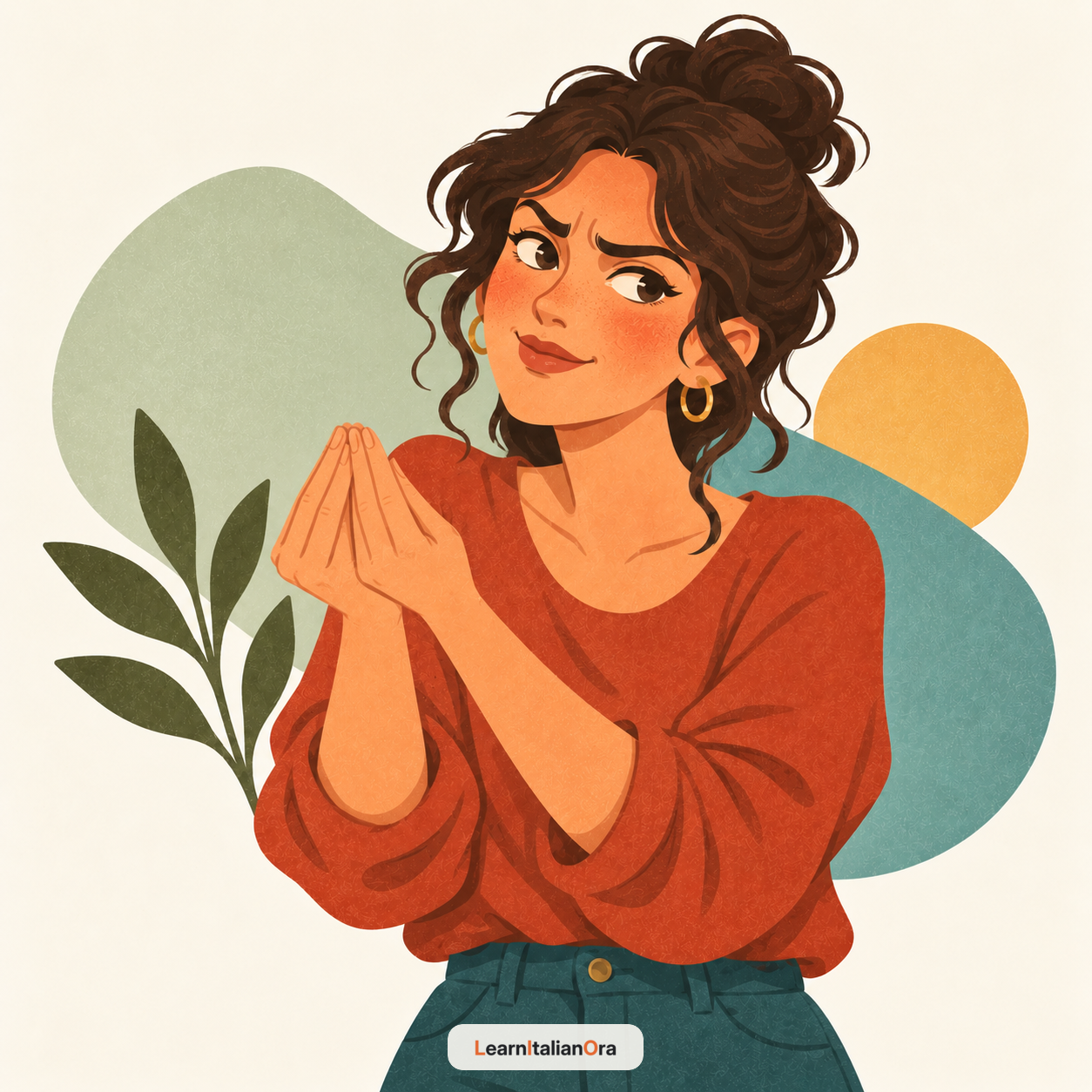
In some informal contexts, repeatedly opening and closing gathered fingers towards another person can challenge or tease them — for example, “Are you afraid?” The meaning depends strongly on expression and situation.
11. Thumb over face gesture

Running the thumb down the cheek can suggest that someone is furbo — clever, crafty or sly. The evaluation can be admiring, teasing or critical depending on context; it does not automatically mean dishonest.
12. The thumbs-up gesture
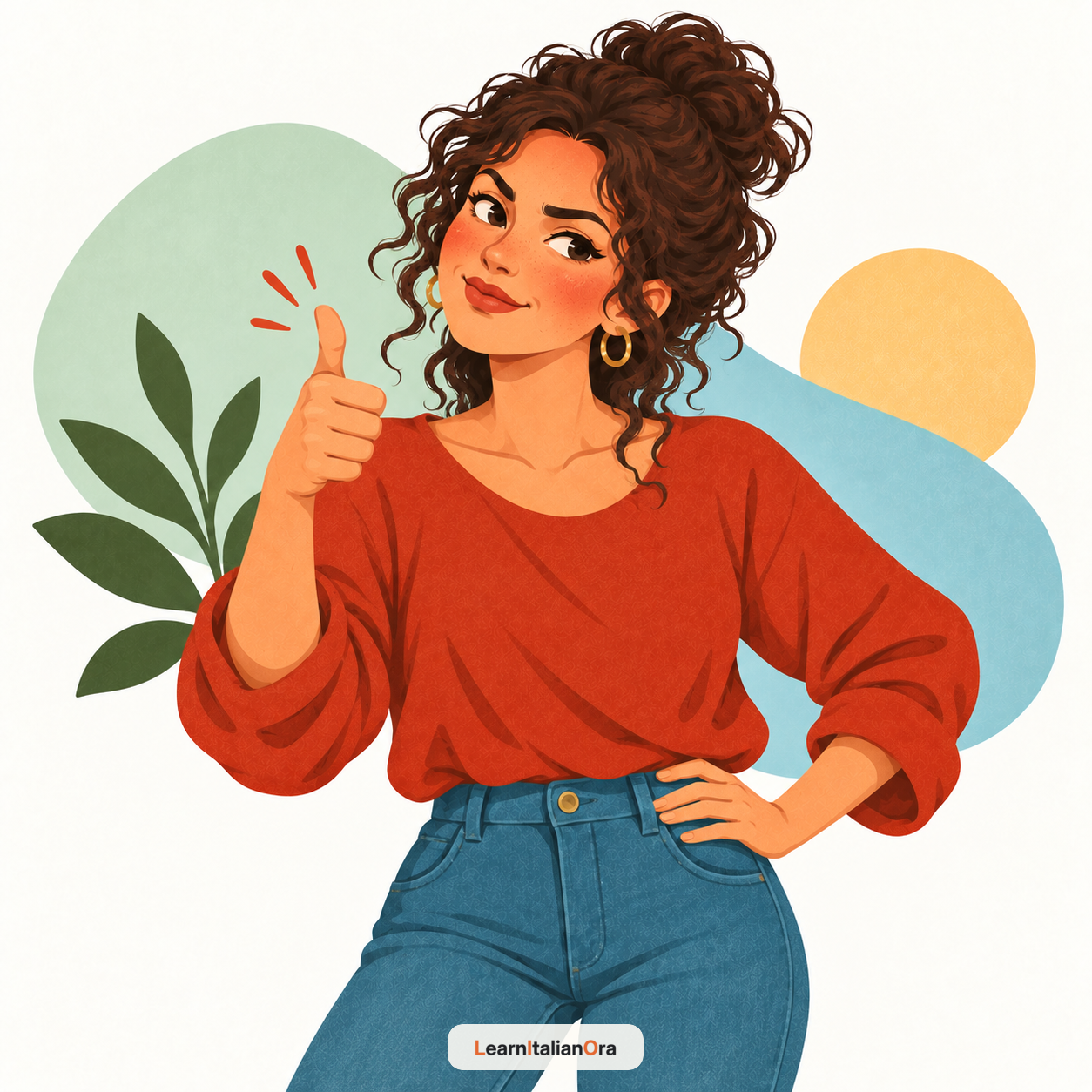
Close the other fingers into the hand and extend the thumb upwards. The gesture commonly expresses approval, agreement, success or “well done”. It is widely understood in Italy and is not uniquely Italian.
To conclude
Body language is a fascinating and complex part of human communication, and in Italy it plays a major role in the way people express themselves. However, cultural gestures and habits can vary greatly from one country to another. Being aware of these differences is crucial for effective intercultural communication.
Non-verbal communication, and gestures in particular, are an essential and sensitive aspect of intercultural communication. Awareness of one’s own gestural habits and openness to understanding the cultural norms of others can help to promote more harmonious and respectful relations between different cultures.
If you have any other curiosities about Italian culture or would like to explore these topics further, feel free to share them in the comments!
Learning Italian on your own requires commitment and dedication, but with the right strategies and resources, you can achieve your goal. Remember to have fun during the process and celebrate every little bit of progress. Enjoy your journey towards learning Italian!