Sentence intonation in Italian – Intonazione della frase in italiano
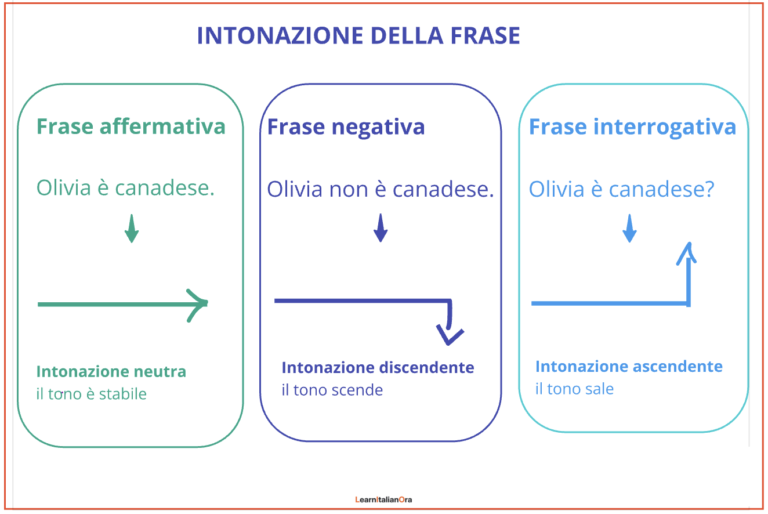
Learn how Italian sentence intonation works in statements and questions, including rising, falling and neutral patterns, with clear examples.
Read more →[ARCHIVE LABEL]
Learn how Italian sentence intonation works in statements and questions, including rising, falling and neutral patterns, with clear examples.
Read more →Prepositions are small words that connect other words and show relationships such as place, direction or time. In Italian, prepositions of place are particularly important for beginners because they allow you to describe where something or someone is. In this post we will look at the most important prepositions of place used in Italian, with practical examples to help you understand and use them correctly.
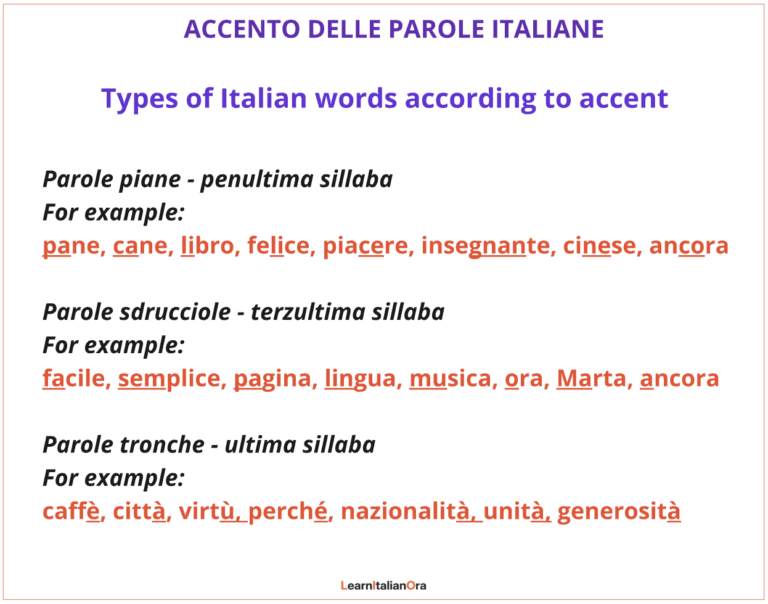
Read more →Learn Italian word stress and accent patterns, including parole piane, sdrucciole and tronche, with clear examples to improve pronunciation.
Read more →Indefinite articles are used when we refer to a person or thing without identifying a specific one. Their form depends on the gender of the noun and on the first sound of the word that follows. They can precede either a noun or an adjective, and their forms change depending on whether the noun is masculine or feminine. The indefinite articles in Italian are UN, UNO for the masculine and UNA, UN' for the feminine. Each form is used in specific contexts according to the word that follows it. Italian indefinite articles follow similar rules to definite articles in the singular.
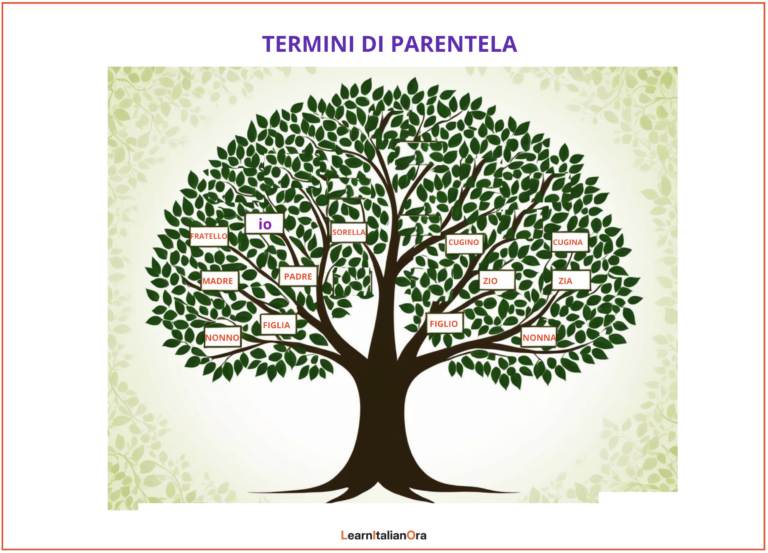
Read more →Learning the names of family members is one of the most important first steps when learning a new language. In Italian, family terms can be slightly different from those in other languages, so it is important to know them well. In this article we will look at the most common terms and use them in simple sentences to help you remember them.
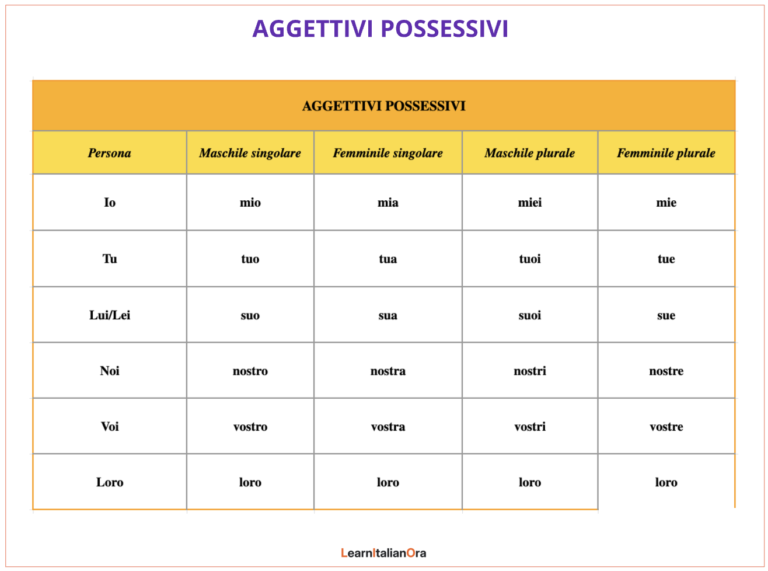
Read more →Possessive adjectives show who something belongs to. Forms such as mio, tuo, suo, nostro and vostro agree in gender and number with the noun they accompany; loro does not change.
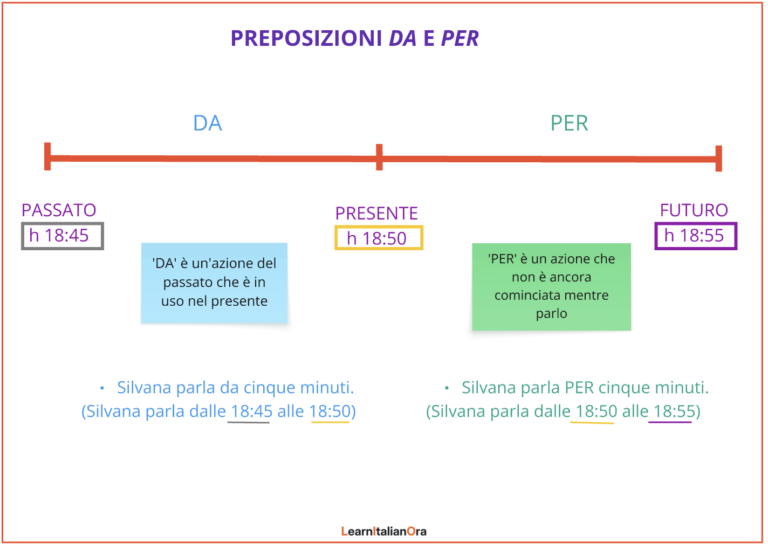
Read more →In Italian, the prepositions DA and PER are used to indicate the duration of an action, but they have different meanings and are used at specific times.DA is used when an action started in the past and still continues in the present.PER indicates how long an action lasts over a limited period. The action may be in the past, present or future, depending on the verb and the context.Let's see how to use them.
Read more →When we ask questions in Italian, question words help us to find out specific information: who (chi) is involved, what (che cosa) is happening, where (dove), when (quando) or why (perché).
Read more →If you are just starting to learn Italian, you have probably noticed that in this language words must 'go together'. This is called grammatical agreement, and it is a fundamental aspect of Italian grammar. Agreement is the relationship between words such as articles, adjectives and nouns, which must match in gender (masculine or feminine) and number (singular or plural). If it seems a bit complicated at first, don't worry! With a little practice and attention, you will be able to master it. In this article, I will take you step-by-step through how concordance works, using clear and simple examples. This is the perfect opportunity to improve your Italian and start building correct sentences right from the start. So let's roll up our sleeves and see how it works!
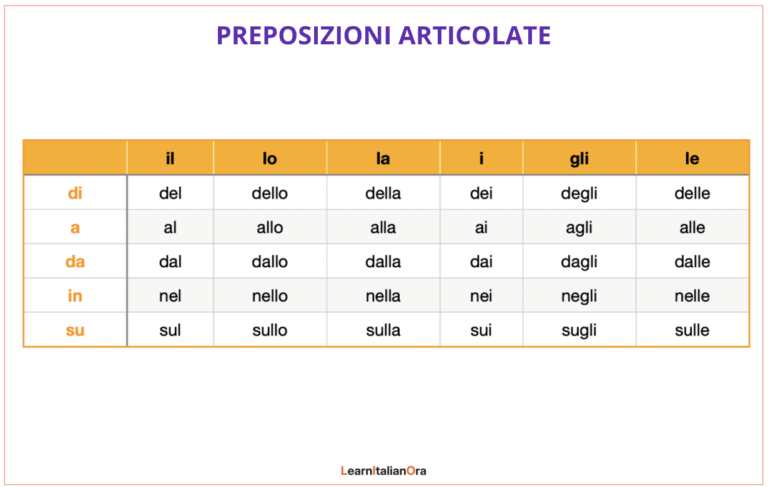
Read more →Prepositions are small but very important words in Italian. They are used to link words and sentences by giving information about a place, time, manner or cause. Learning how to use prepositions correctly is an essential part of speaking and writing clearly and precisely.
Read more →