Vocabulary & Communication
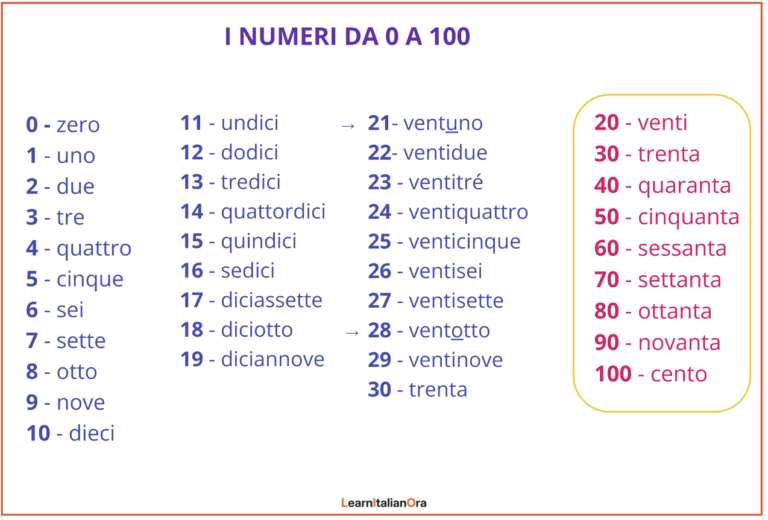
Discover Italian numbers from 0 to 100You need numbers to count, tell your age, tell the time and much more. But don't worry, with a few tricks and a little practice, you'll be able to remember them in no time! In this lesson I will show you how to memorise numbers from 0 to 100, highlight irregular numbers and explain the rules for forming two-digit numbers.
Read more →
Pronunciation
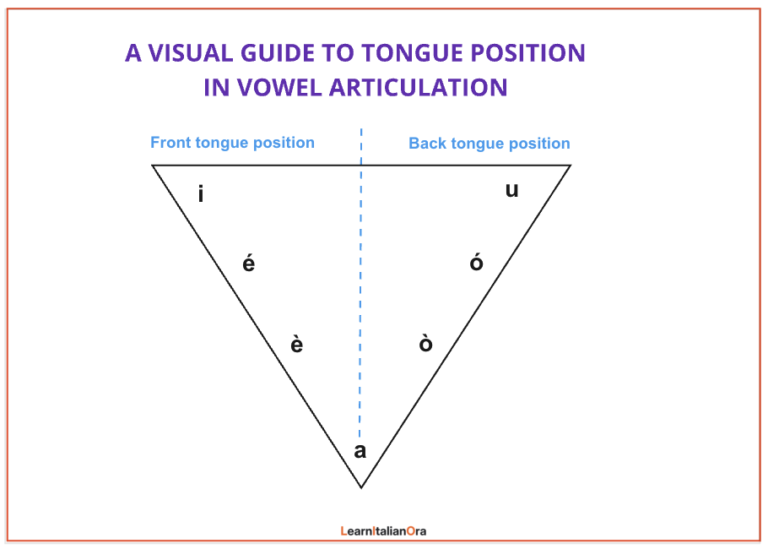
Learn the seven pronunciations of the five Italian vowels, including open and closed vowel sounds, with clear examples for Italian learners.
Read more →
Grammar
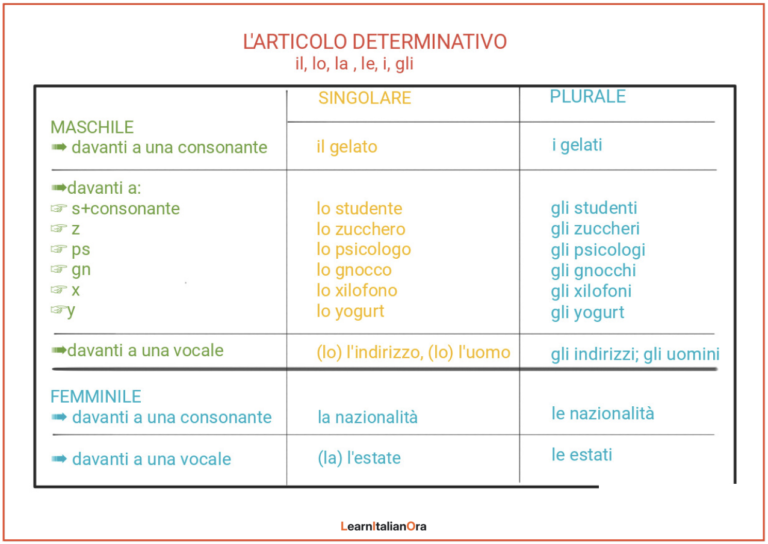
We are going to explore together a very important element of the Italian language: the definite articles. These small but powerful words will help you add precision and definition to your sentences. But don't worry, using definite articles in Italian is easier than you might think! If you think of a sentence as a house, definite articles are the keys that allow you to open the right doors. Are you ready? Let's get started!
Read more →
Grammar
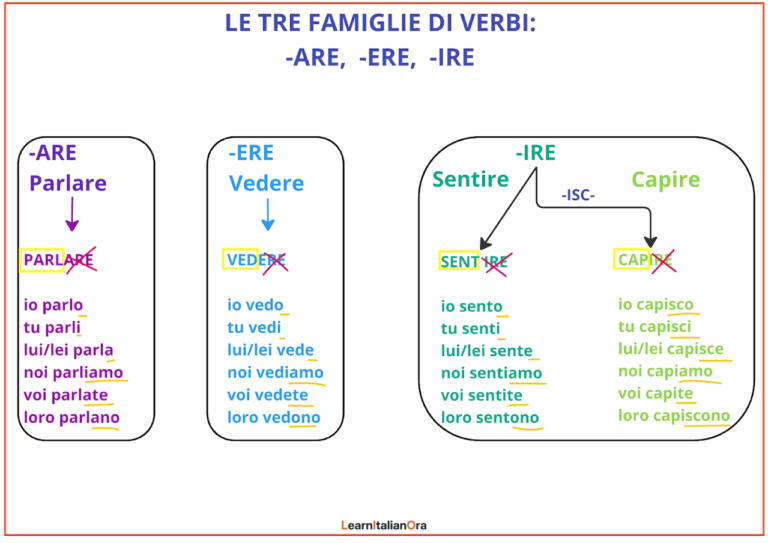
In this lesson we'll look at a basic aspect of Italian grammar: the three verb families. Known as -are, -ere and -ire verbs, these families are the building blocks of Italian verbs and serve as the basis for constructing sentences and expressing ideas. Understanding how each family works and how the verbs within it are conjugated is essential to speaking and writing Italian with confidence and accuracy. Whether you're just starting out or want to deepen your knowledge, mastering these verb families will greatly enhance your ability to communicate in Italian. Let's dive into the world of Italian verbs and discover how you can make your language skills even more solid and natural.
Read more →
Vocabulary & Communication

Il verbo parlare significa esprimere pensieri o informazioni con le parole. Usiamo parlare per comunicare con altre persone o per dire qualcosa.
Read more →
Grammar
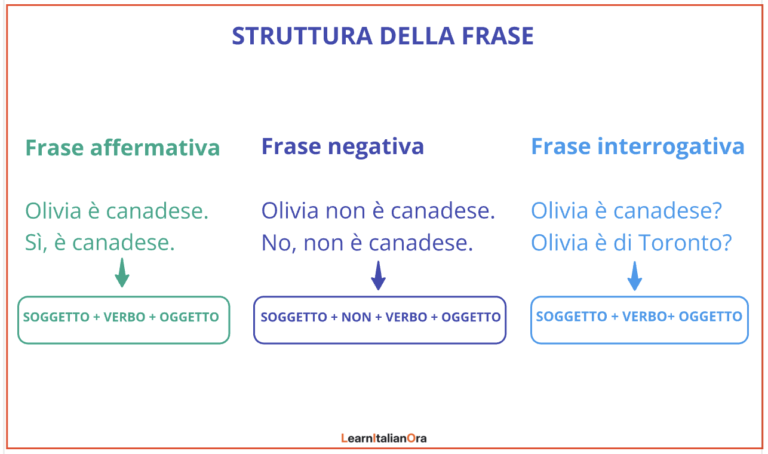
Are you learning Italian and want to understand how to make sentences? Then you've come to the right place! In this lesson I'll take you through the essential steps of constructing simple sentences in Italian, focusing on the key elements that will allow you to communicate effectively. We'll look at how to form affirmative, negative and interrogative sentences, giving you the basis for expressing yourself clearly in everyday situations. Whether you're just starting out or want to consolidate your sentence-building skills, this guide will give you the tools to feel more confident and fluent in Italian. Let's dive in and start forming sentences together!
Read more →
Grammar
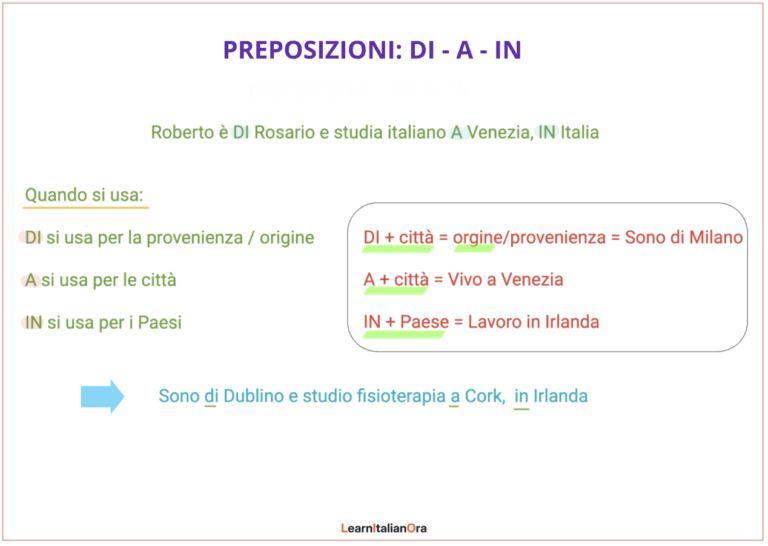
Let's take a look at three essential Italian prepositions: DI, A and IN. When learning a new language, it's important to take things step by step, starting with the basics that will help you communicate right away. In Italian, prepositions play a key role in everyday conversation and mastering just a few can make a big difference. In this lesson we'll focus on DI, A and IN - three basic prepositions that allow you to talk about yourself, your hometown, the city you live in and even the country you call home. By understanding how to use these prepositions, you'll be able to express yourself clearly and lay a strong foundation for your Italian learning journey.
Read more →
Grammar
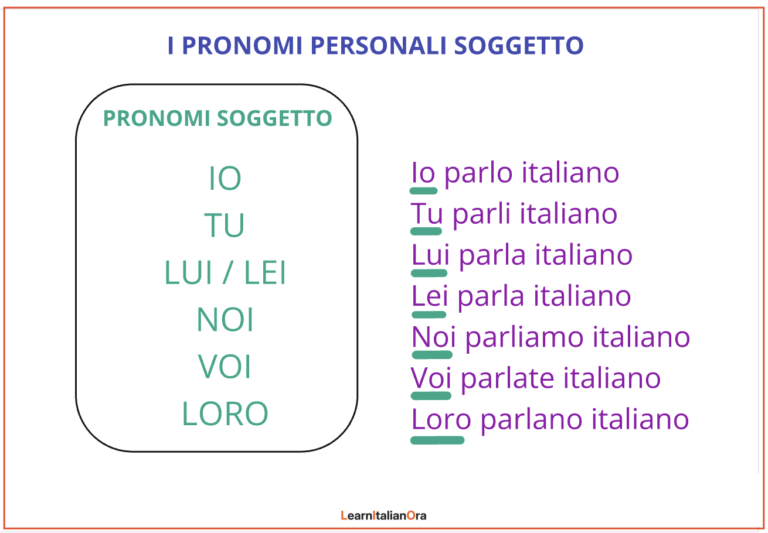
In Italian, subject personal pronouns are an important part of the grammar, helping us to identify who is doing what. They allow us to clarify the subject of a sentence, emphasise certain contrasts or make our speech more fluid and precise. Unlike English, Italian often omits subject pronouns because the verb conjugation already indicates who the subject is. However, understanding when and how to use these pronouns is essential for effective communication - especially when you need to emphasise or differentiate between subjects. In this article we'll explore the subject pronouns in Italian, learning how they are used in different contexts and discovering some interesting regional and stylistic variations.
Read more →
Vocabulary & Communication
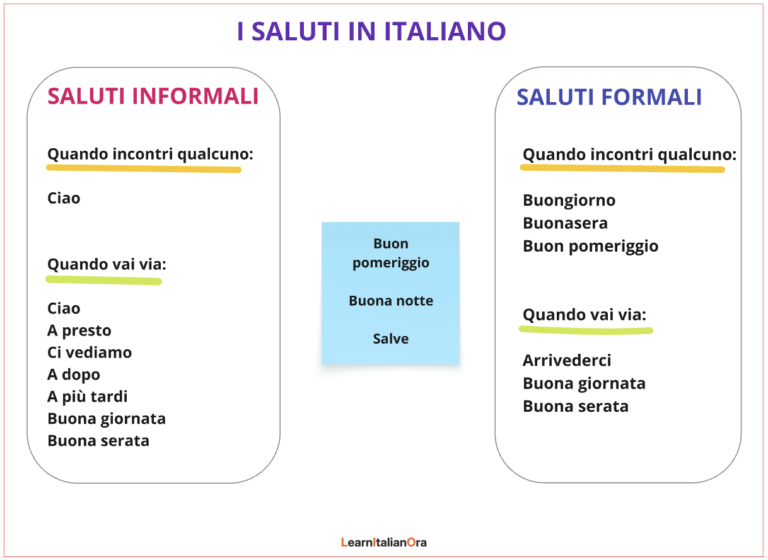
Greetings are an important part of everyday interaction in Italian. The expression you choose depends on the time of day, the relationship between speakers and the level of formality. In this lesson, you will learn the most useful greetings for common situations.
Read more →