Grammar
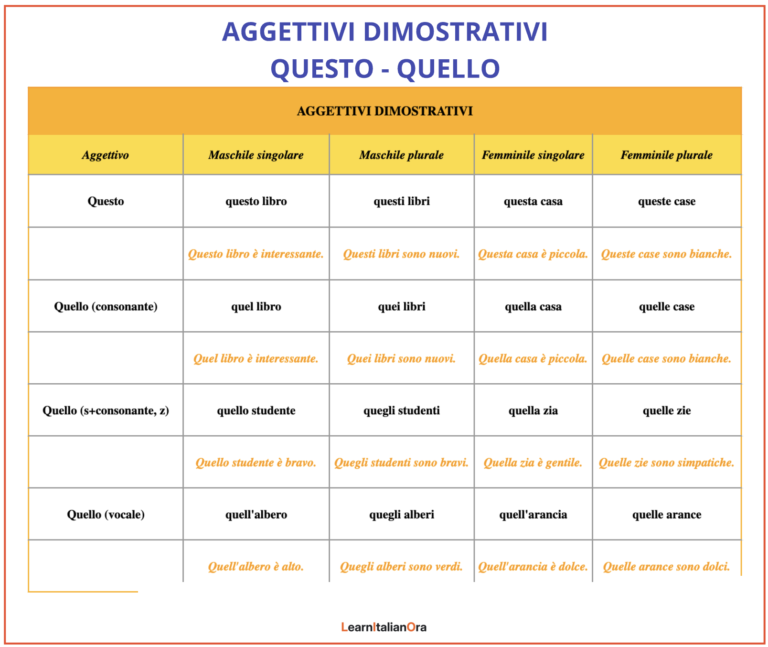
Are you unsure whether to say 'questo libro' or 'quel libro'? You're not alone! The difference between questo and quello confuses many learners. In this guide, you'll learn the simple rule, see plenty of real-life examples, and practise with free exercises.
Read more →
Grammar

Modal verbs - potere (can), volere (want) and dovere (must) - are key to expressing yourself in Italian. These verbs allow you to express possibilities, desires and obligations, making them essential tools for anyone learning the language. Thanks to these verbs, you can construct more complex and precise sentences, even at beginner level. Let us now look at the characteristics of each verb, keeping in mind that these modal verbs are irregular and do not follow the typical conjugation patterns of regular verbs.
Read more →
Grammar
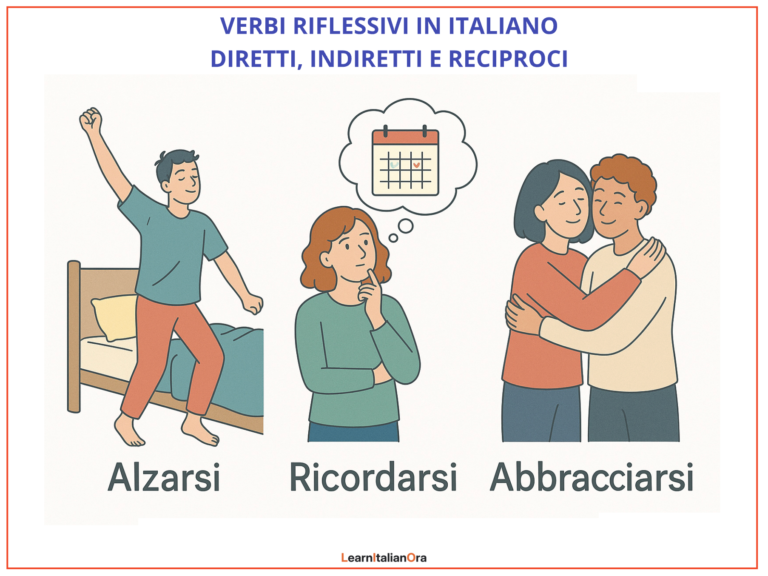
Reflexive verbs (verbi riflessivi) are very common in Italian and can be tricky at first. In this guide, you’ll learn how to use Italian reflexive verbs, including common reflexive verbs in daily life. If you have ever wondered why Italians say mi lavo instead of lavo, or the difference between ricordarsi and ricordare, this post will help you. You will learn: how reflexive verbs are formed;the role of reflexive pronouns (mi, ti, si, ci, vi, si); the difference between direct, indirect and reciprocal verbs and the most common reflexive verbs in daily life.By the end, you’ll be able to use them naturally in everyday conversations.
Read more →
Vocabulary & Communication
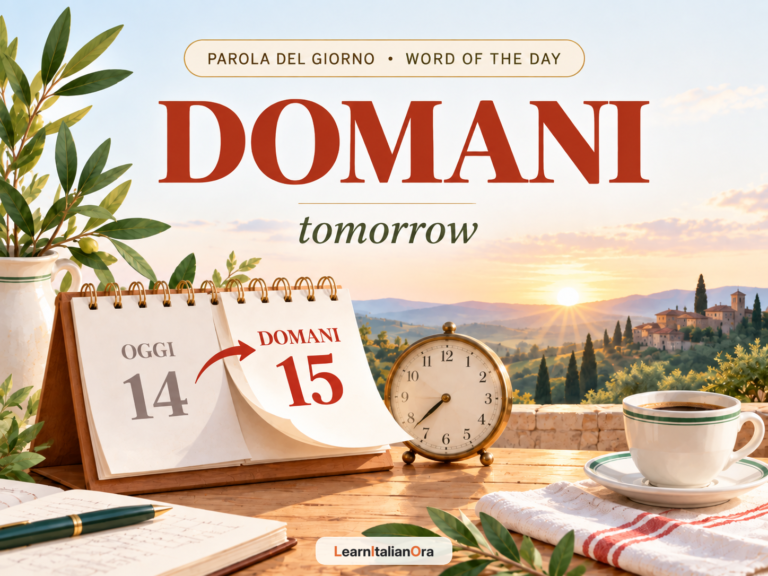
La parola domani indica il giorno dopo oggi. Può anche essere usata per parlare di un tempo futuro.
Read more →
Grammar
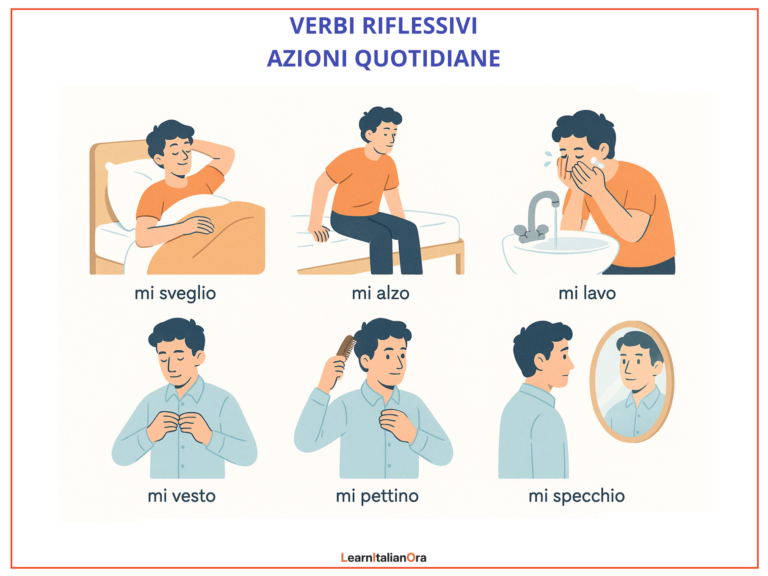
Every day we perform many everyday actions: we wake up, wash, dress, eat, work and go to sleep. But how do we describe these actions in Italian? Let's see together how to describe our day, step by step, using verbs that describe actions involving the subject.
Read more →
Vocabulary & Communication

Il termine negozio indica un luogo dove si vendono prodotti o servizi. Può essere un piccolo negozio di quartiere o un negozio più grande.
Read more →
Vocabulary & Communication
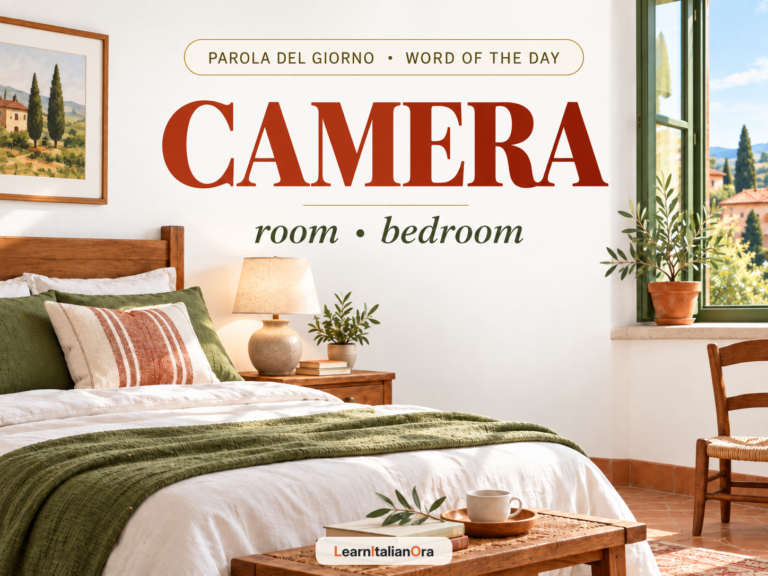
La parola camera significa una stanza della casa, di solito dove si dorme. Può anche indicare una stanza in un hotel.
Read more →
Vocabulary & Communication
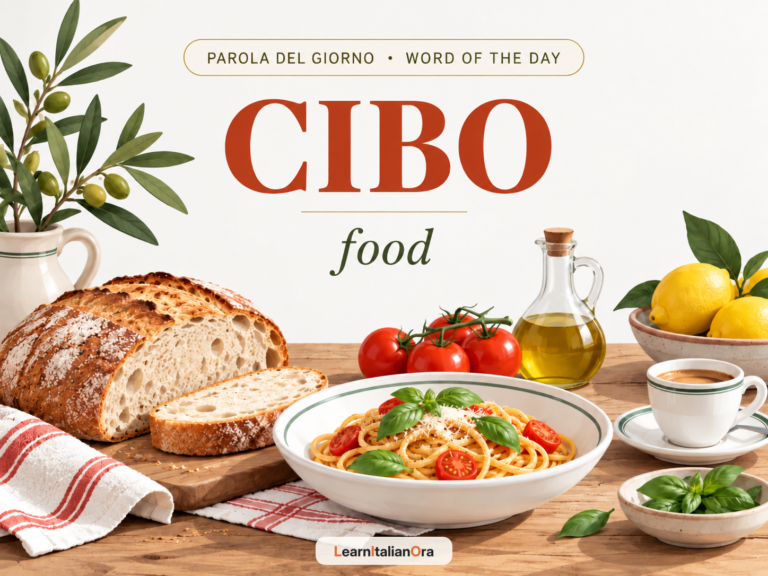
Il cibo è tutto ciò che mangiamo per vivere: frutta, verdura, pane, carne, dolci e molto altro. Si usa per parlare degli alimenti in generale. La parola è comune in tutta Italia e viene usata spesso sia in contesti quotidiani che più formali.
Read more →
Grammar
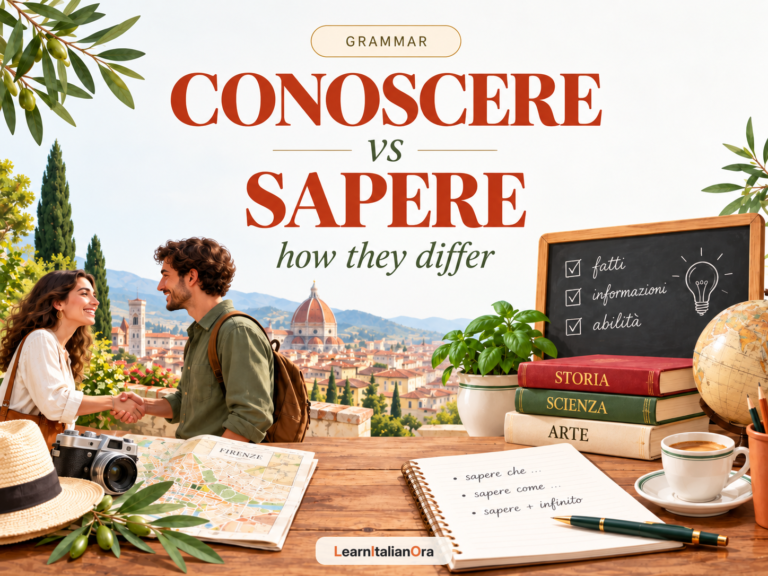
When learning Italian, one of the most common doubts is the difference between the verbs 'conoscere' and 'sapere'. These two verbs, although they can be translated as 'to know' in English, are used in different contexts and with different meanings. Understanding the difference between 'conoscere' and 'sapere' will not only help you avoid common mistakes, but will also allow you to express yourself more accurately and naturally. Let's look at the main differences between the two verbs and the contexts in which they are used.
Read more →
Vocabulary & Communication
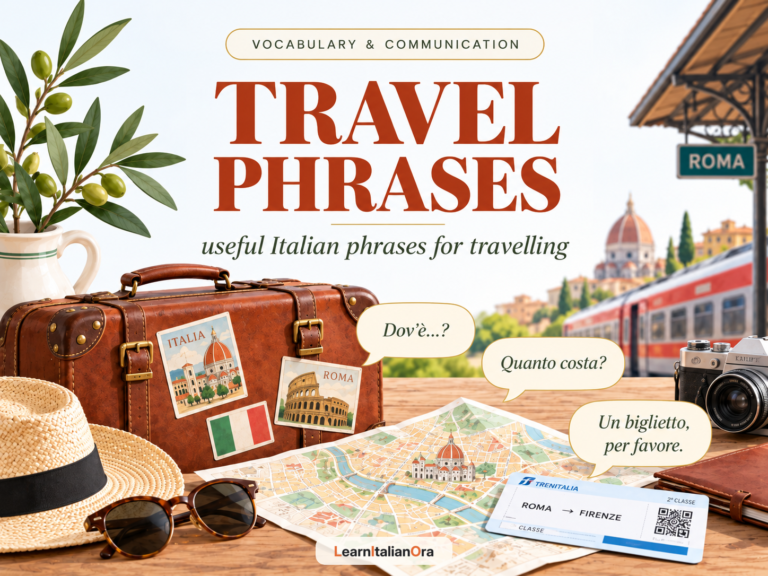
Are you planning to visit Italy during the festive season? Whether you're visiting beautiful Christmas markets, enjoying festive meals or simply exploring the streets decorated with Christmas lights, these practical and simple Italian phrases will help you communicate with ease and make the most of your trip. Here's a list of essential phrases that every beginner can learn!
Read more →